
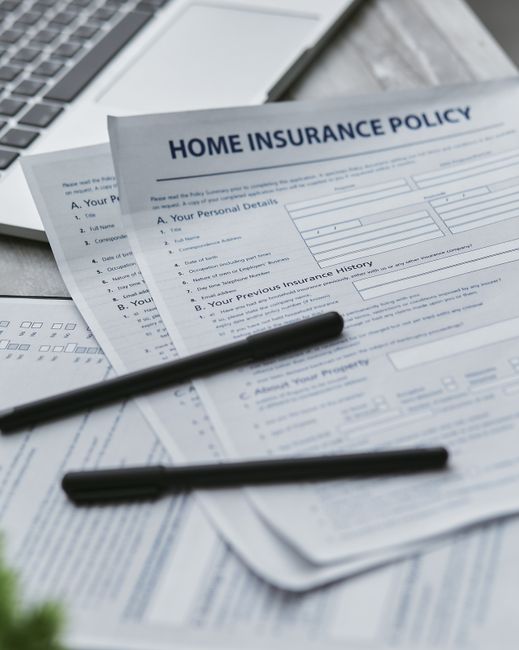
Remote work is usually covered by more than one insurance arrangement, and the answer depends on whether someone is an employee, a self-employed business owner, or an independent contractor. A standard homeowners or renters policy may protect the household, but it often does not fully cover business equipment, business liability, or income-related losses.
Does homeowners insurance cover an employee who works from home?
Usually, a homeowners or renters policy continues to cover ordinary household risks while a person works remotely. The home, personal belongings, and personal liability may remain insured under the terms of the policy.
That does not mean the policy automatically covers everything connected to employment. A company-owned laptop, monitor, phone, or other equipment may belong under the employer’s insurance rather than the employee’s personal policy. The employer may also have rules about who is responsible if equipment is stolen, damaged, or lost.
A remote employee should understand:
- Which equipment belongs to the employer
- Whether the employer covers replacement or repair costs
- Whether work-related information must be stored on approved devices
- Whether the company requires a designated workspace
- How work-related injuries should be reported
- Whether occasional visitors, deliveries, or client meetings are permitted
Personal insurance generally is not designed to replace an employer’s commercial property or cyber coverage.
Are work computers and office equipment covered?
Sometimes, but coverage depends on ownership, policy language, and the reason for the loss.
A personal laptop used for remote work may be covered under a homeowners or renters policy if it belongs to the household and is damaged by a covered event. However, many policies place special limits on computers or other property used primarily for business. A deductible may also apply.
Employer-owned equipment may be covered through the employer’s insurance, an equipment agreement, or a company reimbursement policy. That arrangement should be clear before equipment is brought into the home.
Items that may require special attention include:
- Monitors and docking stations
- Printers and scanners
- Specialized tools or technical equipment
- Business records stored on physical media
- Inventory, samples, or products kept at home
- Furniture purchased specifically for work
- Portable equipment taken between home and another location
A household inventory with photographs, serial numbers, receipts, and ownership information can make a claim easier to document. It should be stored somewhere other than the same computer or device being inventoried.
What if a remote employee is injured at home?
Workers’ compensation may apply to an employee injured while performing job duties at home, but the circumstances matter. An injury directly connected to work activities is treated differently from an injury arising from ordinary household activities.
For example, an employee who trips over work materials while carrying them during a work task may have a work-related injury. An injury that occurs while doing an unrelated household chore may not qualify.
Remote workers should follow their employer’s procedures for reporting injuries, even when the incident occurs in a home office, bedroom, converted room, or other part of the residence. Delayed reporting can make it harder to establish what happened and whether the injury was connected to employment.
In Tennessee, workers’ compensation requirements depend partly on the number of employees and the nature of the business. Employers and workers should not assume that working from home changes those obligations.
Does insurance cover a home-based business?
A home-based business is different from telecommuting for an employer. If a resident earns income directly from services, sales, consulting, online work, design, tutoring, repair work, or another independent activity, the business may create risks that a standard homeowners or renters policy does not cover.
Typical personal policies may provide only limited coverage for business property kept at home or away from the residence. Business-related liability may also be excluded or restricted. This can become significant if a customer, client, delivery person, or contractor is injured on the property during a business activity.
A small endorsement may be available for certain home-based operations. Other businesses may need separate coverage for:
- Business equipment and supplies
- Inventory
- General liability
- Professional mistakes or omissions
- Business data and cyber incidents
- Lost income after covered property damage
- Employees or temporary workers
- Business use of vehicles
The appropriate arrangement depends on the work performed, the value of property, whether visitors enter the home, and whether the business has employees or contractors.
What changes if clients or customers visit the home?
Visitors connected to a business can create a liability issue that ordinary household coverage may not fully address. A policy may treat a social guest differently from a customer, student, patient, client, or delivery person visiting for business reasons.
The risk may be greater where a home office includes:
- A separate entrance
- Frequent appointments
- Heavy equipment
- Stored merchandise
- Animals or other potential hazards
- Parking or walking areas used by visitors
- Work performed in a garage, shed, or detached structure
Even a low-volume operation should be disclosed accurately when insurance is being arranged or renewed. Failure to describe a material business use can create problems if a claim later involves that activity.
Is cyber insurance relevant to remote work?
Cyber risk can affect both employees and self-employed workers. Remote work may involve home Wi-Fi networks, personal devices, cloud accounts, video meetings, email, and access to confidential records.
For an employee, the employer typically controls the organization’s cyber insurance and security requirements. The worker still has practical responsibilities, such as using strong passwords, installing required security updates, avoiding unauthorized storage devices, and keeping business information separate from personal accounts.
For a home-based business, personal property insurance generally does not cover every type of cyber loss. Depending on the operation, separate protection may address data restoration, ransomware, privacy claims, fraudulent transfers, or liability arising from compromised information.
Insurance cannot replace basic security practices. Secure routers, multifactor authentication, regular backups, and clear procedures for reporting suspicious activity remain important.
Does using a personal vehicle for remote work affect coverage?
Occasional commuting or ordinary personal driving is generally treated differently from business use. Problems can arise when a vehicle is regularly used to visit clients, transport inventory, deliver products, collect equipment, or perform paid services.
A personal auto policy may not provide the same protection for frequent business driving as a commercial policy. Employees should also understand whether mileage, vehicle damage, or liability is handled by the employer when driving for work-related purposes.
In a rural and semi-rural community such as Bell Buckle, work may occasionally involve longer drives, unpaved access areas, equipment transport, or visits to customers outside the home. The purpose of the trip matters more than the fact that the worker’s primary office is at home.
What should Bell Buckle residents review before working remotely?
A useful review starts with the exact work arrangement rather than the job title. Consider these questions:
- Am I an employee, independent contractor, or business owner?
- Who owns the equipment in the home?
- Do clients, customers, or coworkers visit the property?
- Is inventory or business paperwork stored there?
- Do I use a personal vehicle for work errands?
- Could a visitor be injured because of the business activity?
- Would the household remain financially stable after a fire, storm, theft, or extended outage?
- Does the policy contain business-use exclusions or limits?
Seasonal storms, power interruptions, detached workspaces, and storage in garages or sheds can affect how a remote-work setup functions and what property needs to be protected. The most reliable answer is found in the specific policy wording, endorsements, employer policies, and business arrangements—not in the assumption that “working from home” is automatically covered.
